
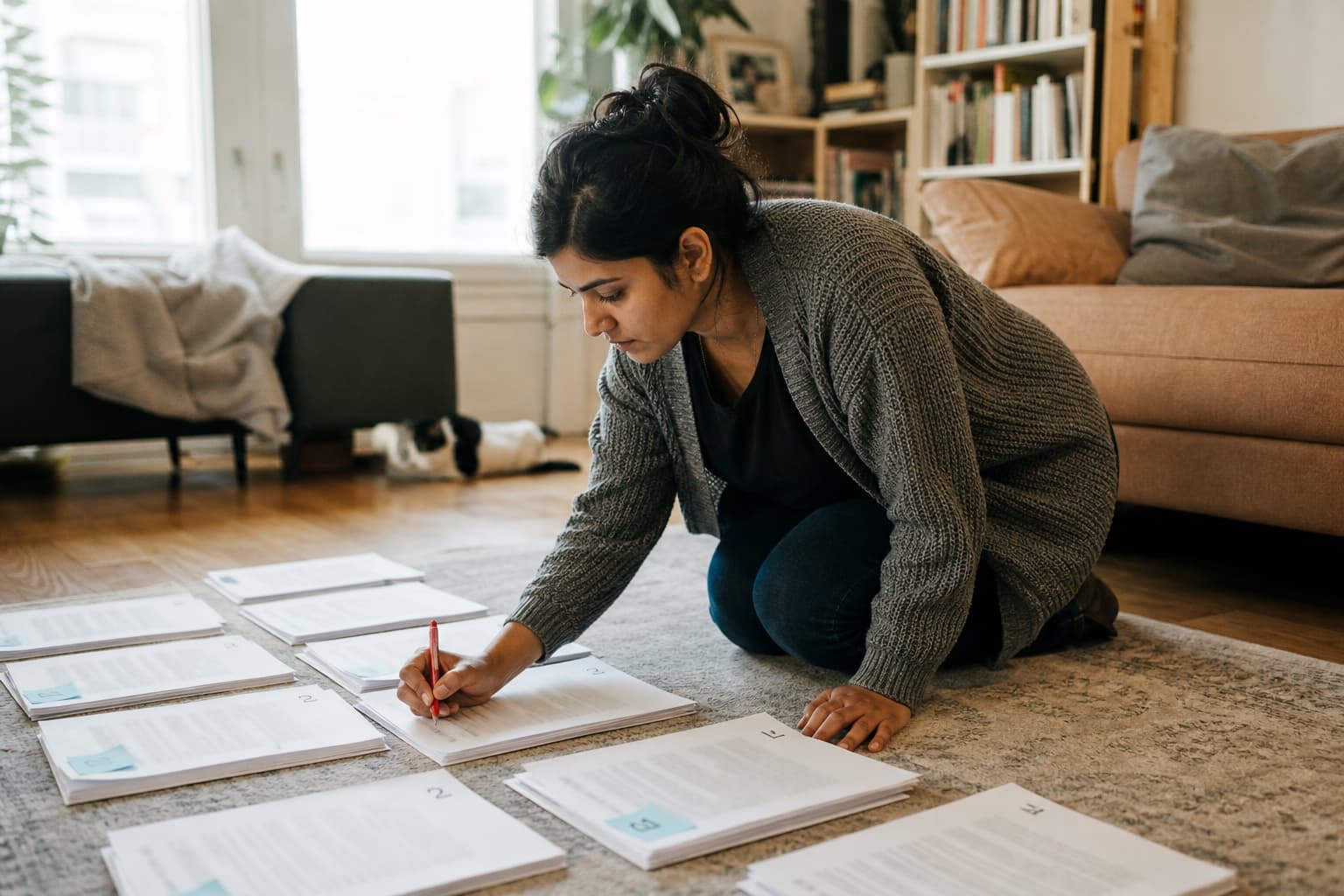
How to Humanize AI Novel Chapters After ChatGPT
Do not paste the manuscript. Outline the chapter, draft the scene, then Human Writes on narration—not on the whole book. Names and continuity stay in your bible.
"Write my novel" is how you get a fluent book that belongs to nobody. "Write chapter 12 from this outline" is still dangerous if you then paste the result into a rewriter as one blob.
The hub is How to Humanize ChatGPT Fiction: lock the beat, Story purpose, one pass. This post is chapter scale. Outline yours. Draft. Humanize narration in scenes. Continuity lives in the bible, not in the model's memory of page 40.
Dialogue has its own problem: Humanize AI Dialogue. General edit loop: Best Practices for Humanizing AI Content.
Why whole-manuscript paste fails
| Dump | What breaks |
|---|---|
| 90k words into ChatGPT | Averaged voice; invented bridges between outlines |
| 4,000-word chapter into a humanizer | Talk, lore, and action get the same rhythm |
| "Make it more literary" on the file | Purple weather; plot "improvements" |
| Yesterday's names, today's pass | Elena becomes Ellen; the limp heals |
Human Writes is a prose pass. It is not your continuity editor.
Chapter workflow (not a book dump)
1. Outline the chapter in bullets you already believe
- Opening image
- The one thing that must change by the last line
- Who is present
- Facts from prior chapters (debt, injury, lie) in a three-line recap you wrote
Do not ask the model to "remember the book." Paste the recap. Ban new locations and new relatives.
2. Draft in scenes, not in "chapter"
A chapter is often two or three scenes. Generate or expand one scene with the recap + beat + ban list. If you draft the whole chapter in ChatGPT, split it before you humanize.
3. Split the file before Human Writes
| Keep out of the humanizer | Send (one pass, Story) |
|---|---|
| Name lists, maps, timelines | Narration after the beat is locked |
| Quoted dialogue you already locked | Action beats around talk (or humanize talk separately) |
| Epigraphs, letters, in-world documents | Stiff summary paragraphs |
Paste into Human Writes once per scene. Then put the pieces back.
4. Diff against the bible
Search the output for: names, place names, the injury, the secret. If any drifted, restore from your outline. Meaning preservation is the product; plot preservation is your job.
Before and after (chapter middle, not a whole file)
AI chapter paste (excerpt):
As the day progressed, Elena couldn't help but feel that the events of the morning had changed everything. She realized she needed to be brave. Meanwhile, Tomas was also going through his own journey of self-discovery.
After scene lock + one Story pass:
Noon. The pan still in the sink. She left the apartment before Tomas came back from the lot, which meant she would have to see him at the shop, which meant the lie would have a counter.
Same chapter job. Second version cannot be filed under "character growth."
Continuity checklist (print this)
- Recap pasted, not "as you know from previous chapters"
- No new proper nouns unless they were on the outline
- Injury / debt / clock still true
- Dialogue speakers unchanged (dialogue post)
- One Human Writes pass per scene, not five on the compilation
- Word count vs your chapter target after the pass
If a scene is mostly talk, do the dialogue workflow first, then a light narration pass. Do not run both problems through one blob.
Where Human Writes helps
| Layer | Use it? |
|---|---|
| Series bible / outline | No |
| Chapter recap you wrote | No |
| Scene narration | Yes, Story, once |
| Locked dialogue | Separate, light |
| Whole .docx | No |
What not to do
- Do not chase a detector zero on fiction. Readers who have skimmed ten ChatGPT novels are the audience.
- Do not humanize until the outline exists. Polished mush is still mush.
- Do not let the model "add a twist" to make the chapter more satisfying.
- Do not claim a rewriter hides AI from a publisher. If KDP or a magazine asks, answer.
Workflow (one chapter sitting)
- Write the chapter bullets and three-line recap without a model.
- Draft or expand scene one in ChatGPT with those constraints.
- Split talk vs narration.
- One Human Writes pass on narration, Story purpose.
- Repeat for scene two.
- Compile, diff names, read the last page against the "must change" bullet.
Bottom line
A chapter is a stack of scenes, not a paste target. Human Writes is for stiff narration after the outline is yours. Keep the bible in your hands.
Paste one locked scene on Human Writes when the recap still matches page 40.