
Prompts That Make ChatGPT Sound Human (Before You Edit)
Upstream humanization: prompt templates that reduce robotic ChatGPT output before you edit. Constraints, voice rules, and one Human Writes pass for the final draft.
The fastest way to sound less like ChatGPT is to stop asking ChatGPT to sound like an essay machine.
Most default prompts produce balanced, polite, low-perplexity prose. Detectors and readers notice. Upstream humanization means baking voice rules into the prompt, then finishing with your facts and one edit pass.
This is not a bypass trick. It is drafting discipline. Full essay workflow: How to Humanize a ChatGPT Essay. After generation: Best Practices for Humanizing AI Content.
What to ban in every prompt
Add an explicit do not use list:
- "In today's rapidly evolving landscape"
- "It is important to note"
- "Furthermore," "Moreover," "In conclusion" chains
- "Delve," "tapestry," "testament," "crucial," "utilize"
- Invented statistics or
[Author, Year]placeholders without your sources
Tell the model to mark missing sources as [NEED SOURCE].
Base template (adapt per assignment)
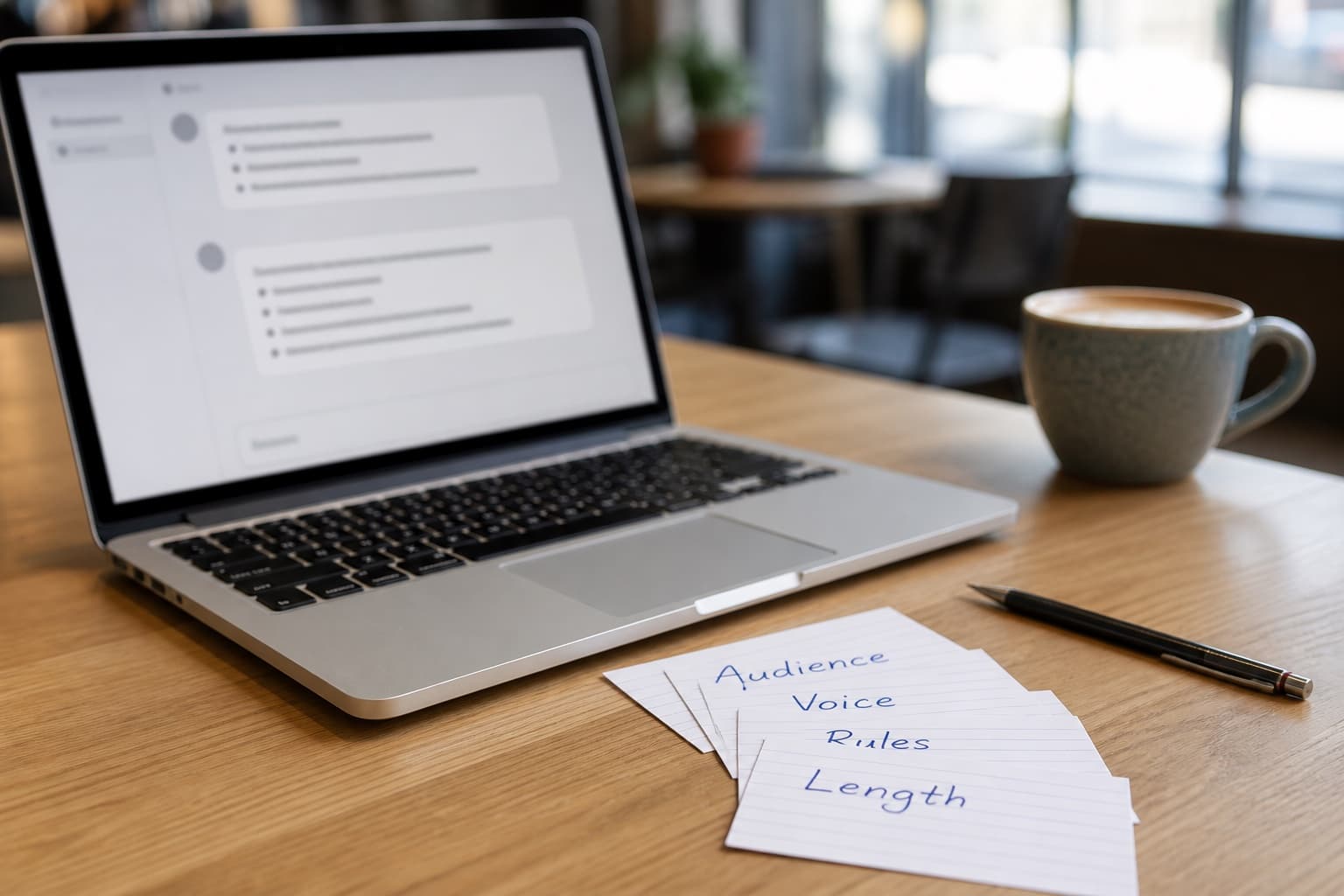
Audience: [who reads this]
Goal: [one sentence outcome]
Length: [word count]
Voice: [plain / conversational / academic-but-not-stiff]
Must include these facts only: [bullet list from your notes]
Rules:
- Vary sentence length; include one short sentence per paragraph
- No throat-clearing intro; start with the point
- Do not invent citations or quotes
- If unsure, write [VERIFY] instead of guessing
Output: outline + rough draft, not final polish
You want scaffolding. Final voice is still yours.
Prompt patterns by task
Essays and papers
Add: thesis in your words, three sources you will verify, required citation style, ban on generic "passion" openings.
Discussion posts
Add: quote or page from the reading, one disagreement with a peer or author, max 250 words, first sentence must reference the text.
See humanize AI discussion posts.
Professional email
Add: recipient name, one specific detail, one clear ask, sign-off style. See email checklist.
Marketing / blog drafts
Add: first-hand example you will supply, banned superlatives, H2s as questions users ask. Pair with SEO and E-E-A-T humanizing.
Example: before/after prompt
Weak:
Write a 500-word essay about climate policy.
Stronger:
Write a 500-word draft arguing [thesis]. Audience: undergrad policy course. Use only these sources: [list]. Open with a specific policy tradeoff, not a history of climate change. Vary sentence length. Ban "Furthermore" and "In conclusion." Mark any claim needing a source as [NEED SOURCE]. Tone: clear, not corporate.
The second prompt still needs your edit. It starts closer to human rhythm.
After the prompt: the three-step finish
- Insert your specifics (names, numbers, class references)
- Rewrite opening and closing yourself
- One Human Writes or manual rhythm pass on flagged spans
Do not loop five full rewrites. Techniques: Natural AI Writing.
What prompts cannot do
- Invent your biography
- Replace syllabus disclosure rules
- Guarantee Turnitin or GPTZero scores
- Fix fake citations
For detection reality: perplexity and burstiness, accuracy in 2026.
The bottom line
Prompts that make ChatGPT sound human are mostly constraints: banned filler, required specifics, varied rhythm, honest gaps. Generate with rules, finish with your voice. One polish pass beats five blind regenerations.
Related articles
- How to Humanize a ChatGPT Essay
- Best Practices for Humanizing AI Content
- Natural AI Writing: 6 Techniques That Work
- Perplexity and Burstiness Explained
Prompt for structure, edit for voice. Try Human Writes after your facts are in the draft.