
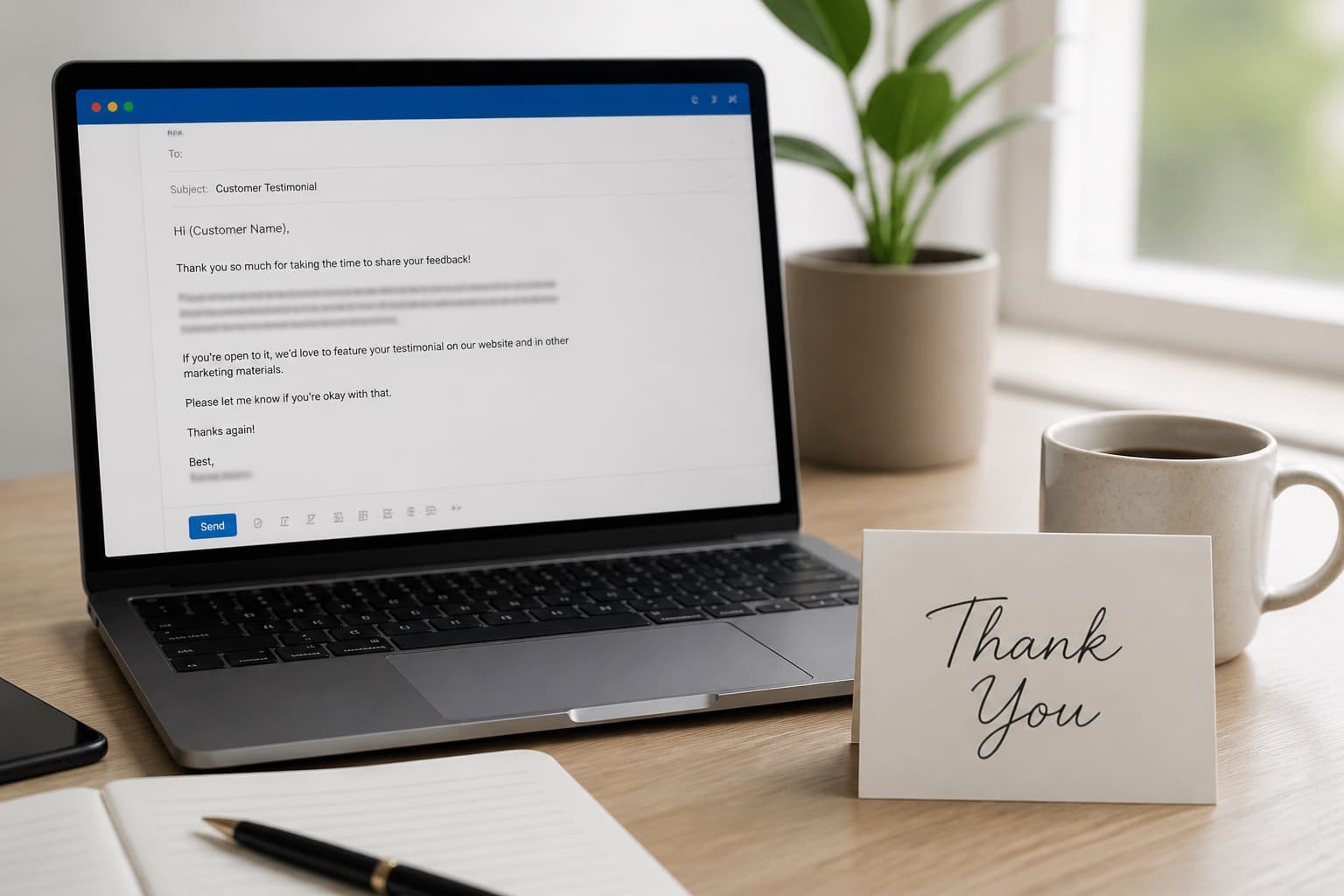
How to Humanize a Testimonial Request Email After ChatGPT
ChatGPT testimonial asks read like marketing surveys nobody finishes. One specific win, three short prompts, and a reply path that takes two minutes. Humanize once with Business Material purpose—not flattery paragraphs.
You need a quote for the homepage. Your customer is mid-rollout and has forty unread Slack threads. ChatGPT testimonial requests sound grateful and vague: "We would love to hear about your experience with our innovative platform." That email gets archived.
A good ask is easy to answer: one specific win you already know they achieved, three short prompts, permission to edit for length. Humanizing means polishing your ask—not ghostwriting their praise.
Related: product marketing copy (where approved quotes land), freelance pitch emails, checklist for human-like emails, disclosing AI in client deliverables.
What AI testimonial asks get wrong
| Pattern | Customer thinks |
|---|---|
| "Share your experience" | Blank page; I'll do it later |
| "Your success inspires us" | Marketing mail |
| No mention of their project | Generic blast |
| Link to a long Typeform | Not today |
| "Would you be willing to participate in a case study?" | Hours of work |
Testimonials are collateral for them too—when the ask is easy, they say yes.
Lock before ChatGPT
Write by hand from the last call or support thread:
- Customer name and company (spell both correctly)
- One specific win they already said aloud ("cut onboarding from six weeks to nine days")
- Three answer prompts they can reply to in one sentence each
- Permission line ("OK to trim for length and fix grammar?")
- Low-friction reply ("Reply inline—no form required")
If (2) is empty, you are not ready to ask. Wait until you have a result they named—not a result you hope they felt.
Testimonial request skeleton
Subject: Quick favor — quote for [your product]?
Body:
- Line 1: Context (you helped them on X; rollout went live)
- Line 2: The specific win you heard from them
- Line 3: Three numbered prompts (see below)
- Line 4: Permission + "reply inline is perfect"
- Line 5: Thanks; no pressure deadline
Prompt examples (pick three):
- What problem were you solving before us?
- What changed after go-live—metric or day-to-day detail?
- What would you tell a peer considering the same switch?
No attachment. No calendar link unless they ask.
Before and after
AI draft:
I hope this message finds you well. We truly value your partnership and would be honored if you could share a few words about your experience with our platform. Your testimonial would mean the world to our team and help other organizations discover how we can support their journey.
After specific win + prompts:
Hi Sam — congrats on getting Northline live last month. You mentioned onboarding dropped from six weeks to nine days once your CSM rewrote the checklist. Could you reply with three one-liners?
- What was broken before?
- What changed after go-live?
- What would you tell another ops lead?
OK if we trim for length and fix typos. Inline reply is fine.
Second version takes two minutes to answer and cites their number.
Humanize workflow
- Pull the win from CRM notes, Slack, or the last QBR—not from imagination.
- Write the five-line skeleton by hand.
- Optional: ChatGPT for shorter wording—ban new claims and adjectives.
- One Human Writes pass with Business Material purpose if rhythm still feels stiff.
- Send from the account manager they know—not a no-reply address.
- When they reply, send the exact quote for approval before it goes on the site.
| Stage | Humanize? | Why |
|---|---|---|
| Request email | Once, after prompts locked | Clarity, not flattery |
| Customer's words | Grammar only, with sign-off | Their voice is the asset |
| Homepage placement | Marketing pass separate | See product marketing guide |
What not to do
- Invent a metric they never mentioned.
- Send the same template to ten customers with only the name swapped.
- Ghostwrite the testimonial and ask them to sign (many will; it reads fake).
- Humanize their reply into brochure voice without permission.
- Tie the ask to a renewal conversation in the same thread—keep asks clean.
Bottom line
Testimonial requests work when one specific win and three short prompts make replying easier than deleting. Human Writes polishes your ask—not their quote.
Paste your draft on Human Writes with Business Material purpose after the win you cite is real.