
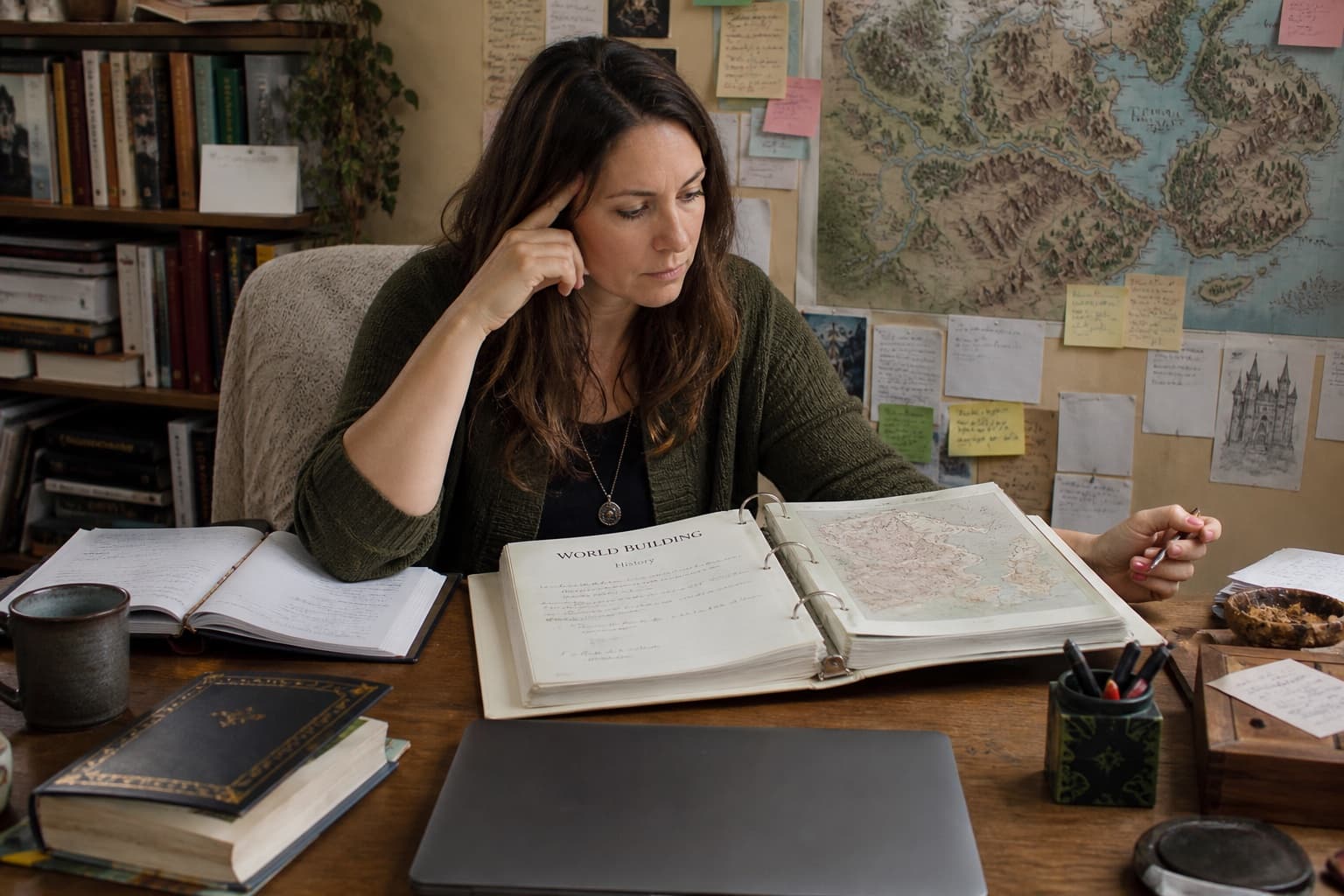
How to Humanize Worldbuilding Prose Without Adding New Lore
ChatGPT worldbuilding prose invents kingdoms mid-paragraph. Lock your bible—names, rules, history—before any draft. Humanize description after the lore is fixed. Story purpose. One pass. No new magic.
Worldbuilding prose is where ChatGPT is most dangerous to your book: it sounds authoritative while inventing a second religion, a lost empire, and a currency you never planned.
Readers forgive stiff sentences sooner than they forgive continuity holes. A humanizer that smooths rhythm but renames a city or softens a magic rule you set in chapter two is not helping—it is rewriting your bible.
Human Writes is the voice pass after lore is locked. Names, timelines, and system constraints stay in your document. Humanize description and exposition—not the canon.
Hub: humanize ChatGPT fiction. Related craft: show, don’t tell, novel chapters, dialogue. Disclosure for markets: KDP and contest AI rules.
What AI worldbuilding prose gets wrong
| Failure | What breaks |
|---|---|
| Lore creep | New kingdom mentioned once, never again |
| Rule drift | Magic costs energy in ch. 1, free in ch. 4 |
| Travelogue voice | Three paragraphs of history nobody asked for |
| Borrowed furniture | Mist, ancient ruins, “a sense of foreboding” |
| Synonym swap on names | “The Silver City” becomes “the gleaming metropolis” |
A humanizer can help the middle three after you lock facts. It must not be allowed to edit the first two.
Bible-locked rule
Before any model help on a scene, copy from your bible—not the chat history:
- Location name (exact spelling)
- Who is present (no new walk-ons)
- Three world facts the scene may state (law, technology, taboo—only what you already decided)
- Three things this scene must not introduce (no new god, no new war, no new species)
- One sensory anchor you chose (the salt wind, the copper taste, the prayer bell)
Prompt with those five and an explicit ban: do not add factions, history, or magic rules. Mark gaps [NEED FROM BIBLE] instead of inventing.
If you skipped (5), you have a blank-page problem, not a voice problem.
Where Human Writes helps
| Pass | Use it? | Why |
|---|---|---|
| Brainstorming continents | Optional, labeled draft | Not canon until you copy in |
| Series bible / timeline | No | Source of truth |
| Proper nouns and rules | No | Continuity |
| Description after facts locked | Yes, one pass, Story purpose | AI sounds like a tour guide |
| Whole chapter | No | Scene by scene |
Paste the locked paragraph into Human Writes, choose Story, humanize once. Diff against the bible. Restore every name and rule if they drifted.
Before and after
AI draft:
The ancient kingdom of Valdris had long been a land of mystery and wonder, where magic flowed through every stone and the people lived in harmony with powerful forces beyond mortal understanding.
After bible lock:
Valdris allows thaumaturgy only in the guild halls—street casting is a misdemeanor, and the bell on Harbor Row still rings when someone tries. Mara kept her hands in her pockets until she crossed the guild threshold.
Same setting. Second version has rules, place, and character behavior from your bible—not a postcard.
Exposition vs description
| Type | Goal | Humanize? |
|---|---|---|
| Exposition | Reader learns a rule they need now | After rule is quoted from bible |
| Description | Reader feels place | Yes, one Story pass |
| History dump | Often cut | Fix structure first, not voice |
| Travel transition | Get characters moving | Keep map names exact |
If a paragraph exists only because the model loves worldbuilding, delete it before you humanize. Polished filler is still filler.
Workflow (one scene)
- Copy the five lock-lines from your bible.
- Draft or expand in ChatGPT with a ban on new lore.
- Cut every sentence that could appear in another genre’s wiki entry.
- One Human Writes pass with Story purpose.
- Diff against the bible. Restore names, dates, and magic costs.
- Read aloud. If you hear a new country, revert.
For full fiction workflow, start at humanize ChatGPT fiction.
What not to do
- Let the model name a religion you will contradict later.
- Humanize five times until “Valdris” becomes “the northern realm.”
- Paste ten chapters hoping continuity survives.
- Chase detector scores by sanding off the only specific rule in the scene.
- Treat humanizing as permission to hide AI use from a publisher—disclose when asked.
Bottom line
Worldbuilding prose fails when lore drifts. Humanize description after the bible is sacred. Story purpose, one scene, one pass.
Paste locked description on Human Writes when the guild bell still rings on Harbor Row.